How to Choose the Right Globe
The globe you fit decides how bright a light is, what colour it casts and what it costs to run. Choosing one comes down to four things: the base (E27, B22 or E14, listed on each product page), how many lumens you need for the room, the colour temperature in kelvin, and the shape if the globe is on show. Watts no longer tell you brightness. Lumens do: as a rough guide, an 800 lumen LED, about 8 to 12 watts, matches an old 60 watt globe.
This guide covers the numbers on the box, the globe types worth knowing, the colour temperatures and how many lumens each room needs.
Our fittings take a globe you choose yourself
Every fitting we sell is built around a standard, replaceable globe you buy separately. None are sealed or integrated LED, so you choose the brightness and colour that suit the room and change them later. Our fittings use one of three bases: E27 (large screw), B22 (bayonet, push and twist) or E14 (small screw, usually candle fittings). Check which yours takes before you buy globes. The base and maximum wattage are listed on each product page.
What do lumens, watts and kelvin mean?
Three figures do the work.
- Lumens (lm) measure brightness. The higher the number, the brighter the globe.
- Watts (W) measure energy used, not brightness. Since LED, a low-wattage globe can still be very bright, so watts now tell you running cost and whether you are within the fitting's limit, not how much light you get.
- Kelvin (K) measures the colour of the light, from warm and golden to cool and blue.
Watts are not brightness: the LED equivalents
Watts used to be a reliable guide to brightness, back when a 60W globe gave a familiar amount of light. That no longer holds, because an LED reaches the same brightness at far lower wattage. Use this as a rough guide to the wattage each globe type needs to hit the same brightness.
| Lumens (brightness) | Incandescent W | Halogen W | CFL W | LED W |
|---|---|---|---|---|
| 250 | 25 | 18 | 4 to 6 | 3 to 4 |
| 500 | 40 | 28 | 7 to 9 | 5 to 8 |
| 800 | 60 | 42 | 11 to 14 | 8 to 12 |
| 1100 | 75 | 52 | 14 to 17 | 11 to 17 |
| 1500 | 100 | 70 | 19 to 23 | 15 to 23 |
So an 800 lumen LED, at 8 to 12 watts, gives about the same light as an old 60W incandescent for a fraction of the power.
Which globe type should you choose?
For almost every fitting, LED is the sensible choice. It draws a fraction of the power, lasts far longer, often 15,000 to 25,000 hours, and now comes in warm tones and filament styles that suit period and decorative fittings, not just the flat modern look of early LEDs.
Filament LED copies the look of a traditional Edison globe, with visible filaments inside clear glass, and is the one to reach for when the globe is on show. Halogen and incandescent still exist but are largely phased out on efficiency grounds and cost far more to run, so there is little reason to fit them new. CFL, the curly energy-saver, has been overtaken by LED. Smart globes add app or voice control and scheduling, in LED form, if you want to set scenes or dim without a wall dimmer.
What colour temperature should you choose?
Colour temperature is measured in kelvin. Lower numbers are warmer and more golden; higher numbers are cooler and bluer.
| Colour | Kelvin | Where it suits |
|---|---|---|
| Candlelight | 1800 to 2600K | atmospheric and exposed-filament pieces, snugs, bars |
| Warm white | 2700 to 3000K | living rooms, bedrooms, dining; flatters brass and timber |
| Natural white | 3000 to 4000K | kitchens and bathrooms, clarity without going clinical |
| Cool white | 5000 to 6500K | task and utility spaces, some outdoor security; rarely wanted in living areas |
Match the colour to the style, not just the room. Traditional and period pieces, and brass finishes, look best under warm white or candlelight. Contemporary and coastal fittings can carry a slightly crisper, natural-white note. Task areas want more clarity whatever the style. Outdoors, a warmer tone flatters a facade and tends to attract fewer insects than cool white.
Globe shapes explained
Shape matters most when the globe is on show. The common ones:
| Shape | Typical use |
|---|---|
| Round (A60) | general purpose, the classic globe shape |
| Candle | candelabra fittings, chandeliers and wall candles, usually E14 |
| Teardrop | a softer, tapered take on the round globe |
| Tubular | long and slim, for linear and some exposed fittings |
| Oversized filament | a feature globe, used where the globe itself is on display |
How many lumens does each room need?
Work out the room's floor area in square metres, then multiply by a rough lumens-per-square-metre figure for how the room is used.
| Room | Indicative brightness (lumens per m²) |
|---|---|
| Bedroom / living room | 100 to 200 |
| Dining | 400 to 500 |
| Kitchen (general) | 300 to 400, more over benches |
| Bathroom | 500 to 800, brightest at the mirror |
| Home office / study | 400 to 500 |
| Hallway / entry | 100 to 150 |
So a 15 m² living room at around 150 lumens per m² needs roughly 2,250 lumens in total, spread across all the fittings in the room, not delivered by a single globe.
Treat these as starting points, not rules. Layering is what makes a room work: combine ambient, task and accent light rather than chasing the whole figure from one pendant. Dark walls, tall ceilings and heavy furniture all absorb light, so lean towards the higher end when they are in play.
Matching the globe to the fitting
The right globe depends less on the room than on how the fitting shows the light. As a rule: fit a clear globe wherever the globe is on show, candle globes in chandeliers and wall candles, and a frosted or opal globe behind opal glass.
Exposed-globe fittings
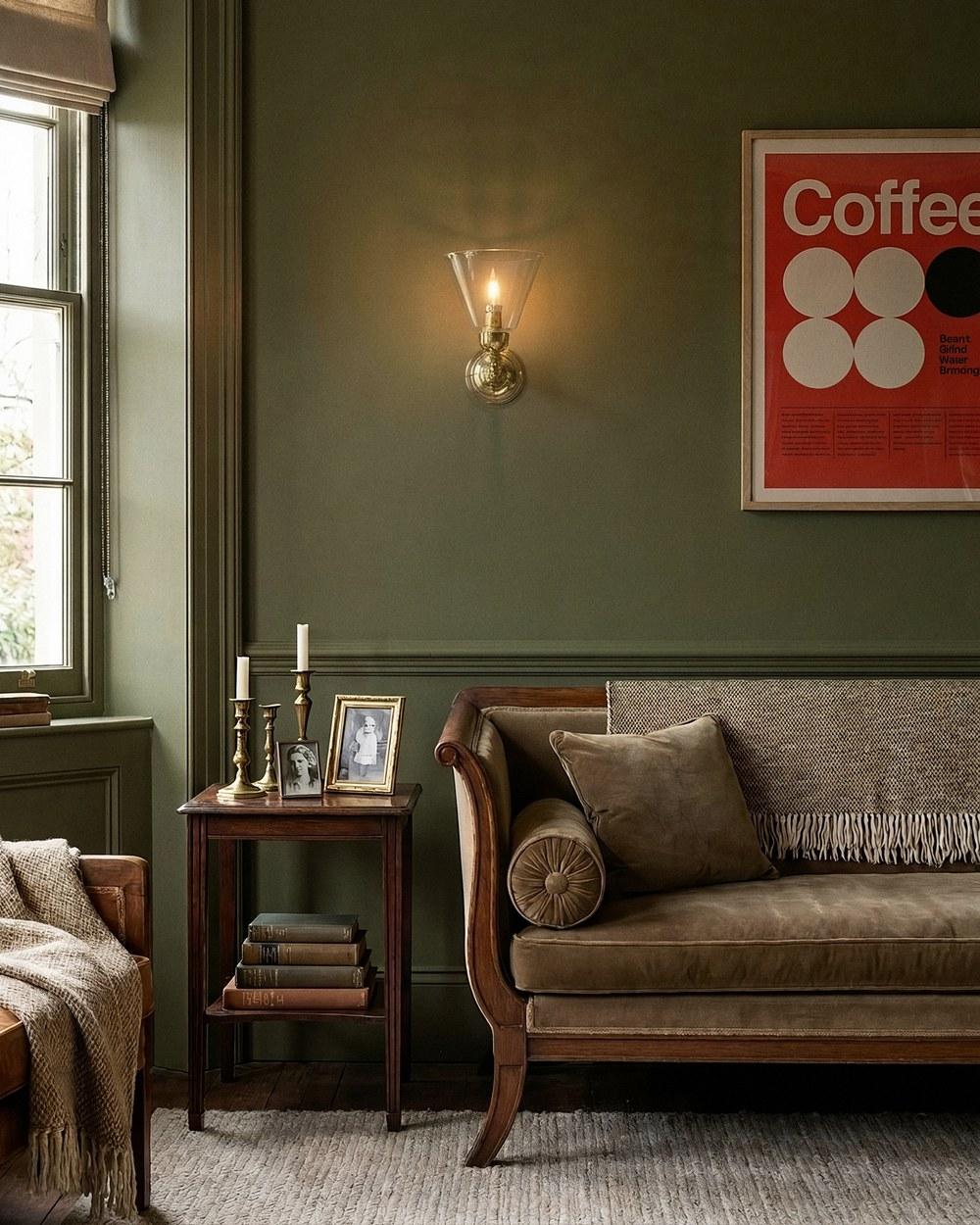
Where the globe is on display, it becomes part of the design. Choose a filament LED, or an oversized decorative globe, with clear glass so the filament shows, in warm white. A frosted globe works against a clear-glass fitting, since the glass is there to show the globe, not hide it.
Shaded or diffused fittings
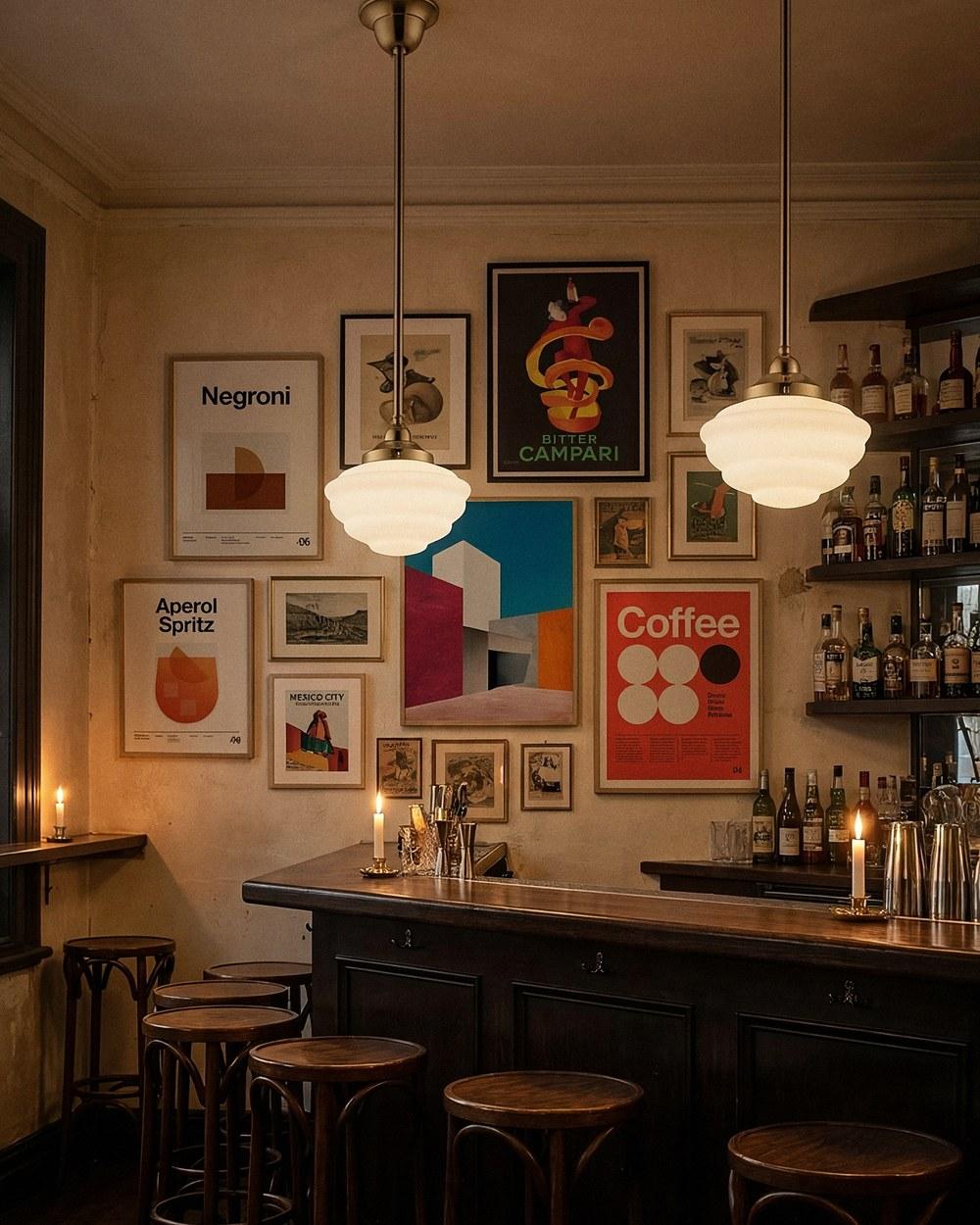
With opal glass, fabric or an enclosed shade, the globe is hidden, so its shape barely matters. Choose on brightness and colour instead. Behind opal glass, such as our Cannes and Chateau fittings, a frosted or opal globe avoids a hot spot showing through the shade.
Chandeliers and wall candles
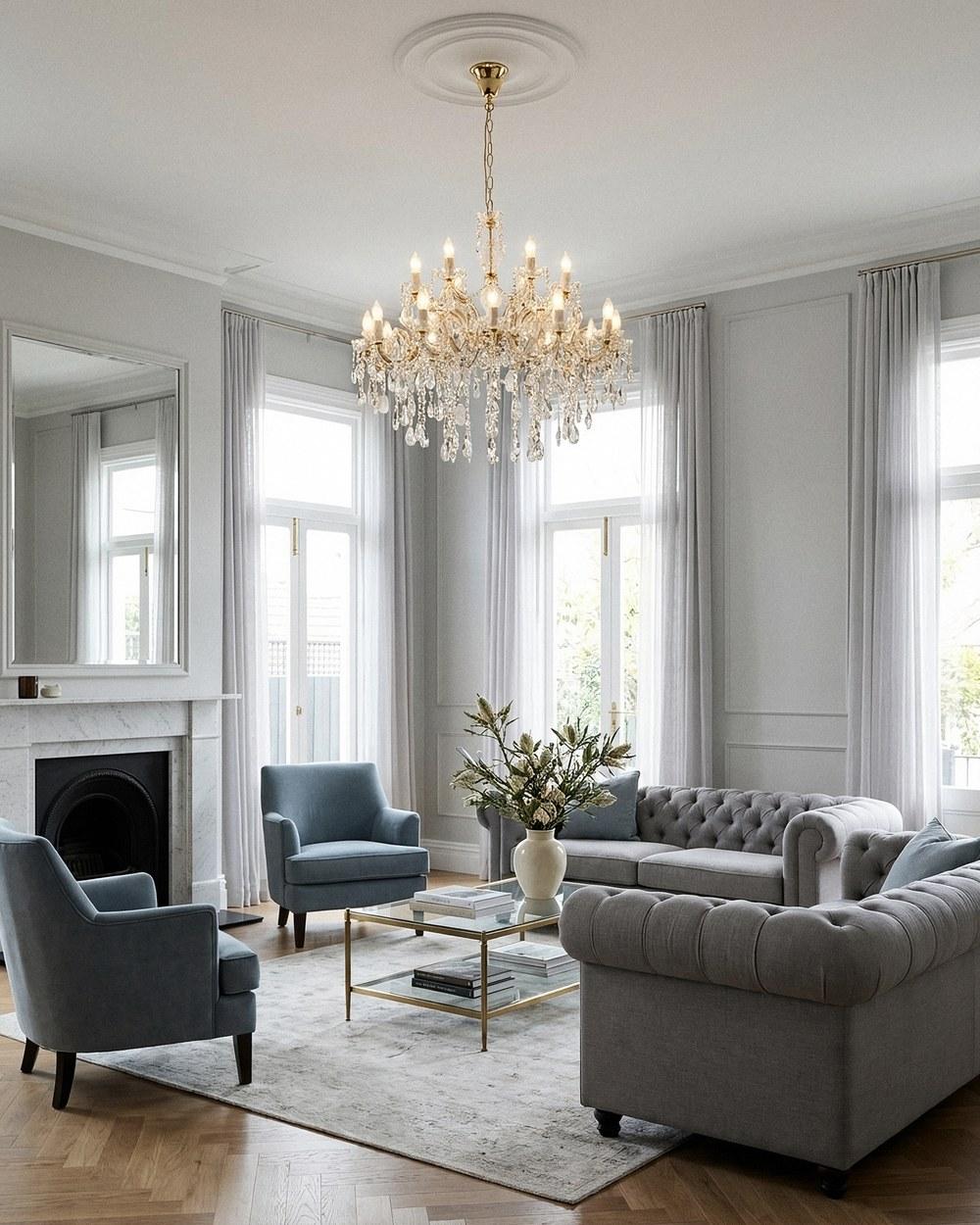
Most of our chandeliers, multi-light pendants and wall candles take small E14 candle globes. Several globes share the room's total, so each one can be modest. On crystal pieces like our Zurich and Celestial ranges, clear globes add sparkle to the cut glass. Keep the globes consistent across the fitting. Mixing clear and frosted candles on one chandelier looks uneven.
Outdoor fittings
Outdoor fittings need a globe matched to the housing. An enclosed, weatherproof fitting, such as our solid brass Maritime, Admiral and Marina bunkers, needs a globe rated for enclosed use. Check the fitting's IP rating and see the note on colour temperature above. Browse the range in our bunker lights collection.
Dimming, and staying within the maximum wattage
To dim, you need two things: a dimmable LED globe, and a dimmer that suits LED. Older dimmers built for incandescent often flicker or buzz with LED, and a trailing-edge or LED-rated dimmer fixes that. Not every LED globe dims, so check the box.
Stay under the fitting's maximum wattage, which is marked on the fitting and listed on each product page. With LED this is rarely a concern, since LEDs draw a fraction of the watts, but it matters if you are still running incandescent or halogen.
A quick checklist before you buy
- Base: does your fitting take E27, B22 or E14?
- Brightness: enough lumens for the room and how it is used?
- Colour: warm, natural or cool for the space?
- Shape: does the globe suit the fitting, especially if it is on show?
- Dimming: is the globe dimmable, and is your dimmer LED-compatible?
- Outdoors: is the globe rated for an enclosed or weatherproof fitting?
In short
Once you have chosen the fitting, matching the globe is quick. The base and maximum wattage are listed on each product page, so you only need to settle on brightness, colour and shape to suit the room.